
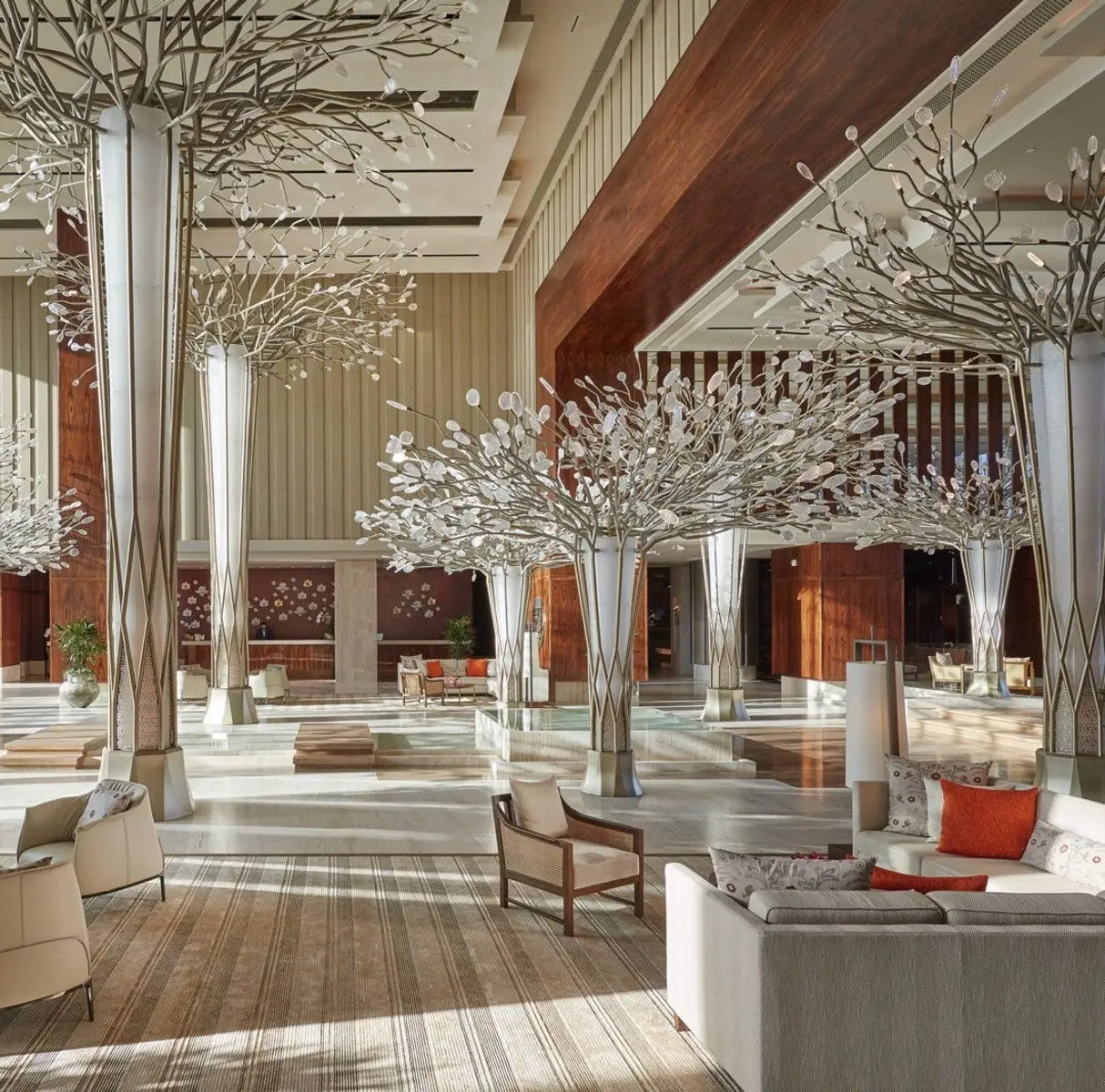
Every hotel has an identity shaped through its architecture, furnishings, lighting, materials, and decorative details. Artwork adds another layer by introducing color, culture, texture, and emotion into carefully designed spaces.
Collaboration between interior architects and art specialists allows each element to complement the next. This integration makes hotel art consultancy an important component of distinctive hospitality interiors.
Connecting architecture with artistic expression
Interior architecture defines proportions, circulation, materials, lighting, and furniture placement. Art then works within this framework to introduce visual interest and personality. An artwork can complement architectural lines, contrast with neutral finishes, or echo a selected color palette. This relationship gives designers an opportunity to develop cohesive interiors where paintings, sculptures, installations, and decorative pieces support the broader design concept without competing with essential architectural features.
Creating a unified guest experience
Hotels contain several spaces, from entrances and reception areas to corridors, lounges, restaurants, and guest rooms. Each area serves a distinct function, but a consistent artistic language helps the property maintain a recognizable identity. Art consultants study the interior scheme and select pieces that suit each setting. They consider scale, placement, subject matter, materials, and visual balance, helping every area communicate with the others.
Matching art with architectural details
Architectural details provide useful cues for art selection. A dramatic staircase may suit a large sculptural installation, while a refined hallway may benefit from a curated collection of smaller works. Wall proportions, ceiling heights, natural light, furniture arrangements, and surface finishes all influence artistic choices. Consultants assess these details before selecting pieces, ensuring artwork feels intentional within its surroundings and maintains visual harmony.
Supporting the hotel’s identity
Art gives hospitality interiors a distinct voice. A contemporary hotel may feature bold geometric works, while a heritage inspired property may showcase regional craftsmanship and cultural references. Consultants study the hotel’s concept, audience, location, and design language before developing an art direction. This approach helps artwork support the identity established by the architecture and gives guests a clearer impression of the property.
Bringing designers and artists together
Successful collaboration between interior architects and art consultants starts with communication. Designers share drawings, material palettes, lighting concepts, and spatial details, while consultants contribute artistic knowledge and sourcing expertise. Together, they establish suitable artwork specifications, locations, dimensions, and installation requirements. This cooperation reduces visual clashes and helps every artistic element work naturally within the finished interior.